
Blockchain
Walmart, in collaboration with IBM Food Trust, uses blockchain technology to enhance the traceability of food products across its supply chain. This system has drastically reduced the time required to trace food origins, cutting it down from 7 days to just 2.2 seconds. The blockchain ensures real-time tracking and verification of goods, which is crucial for preventing the spread of contaminated products and enhancing food safety.
For instance, during an E.coli outbreak linked to romaine lettuce, Walmart used blockchain to quickly identify the contamination source, improving its response time and reducing the risks posed to consumers. Following this success, Walmart has required its leafy greens suppliers to adopt this technology for complete end-to-end traceability.
The blockchain system not only boosts transparency but also strengthens consumer confidence by ensuring that every product can be traced back to its origin, which enhances both safety measures and operational efficiency.
Robotics
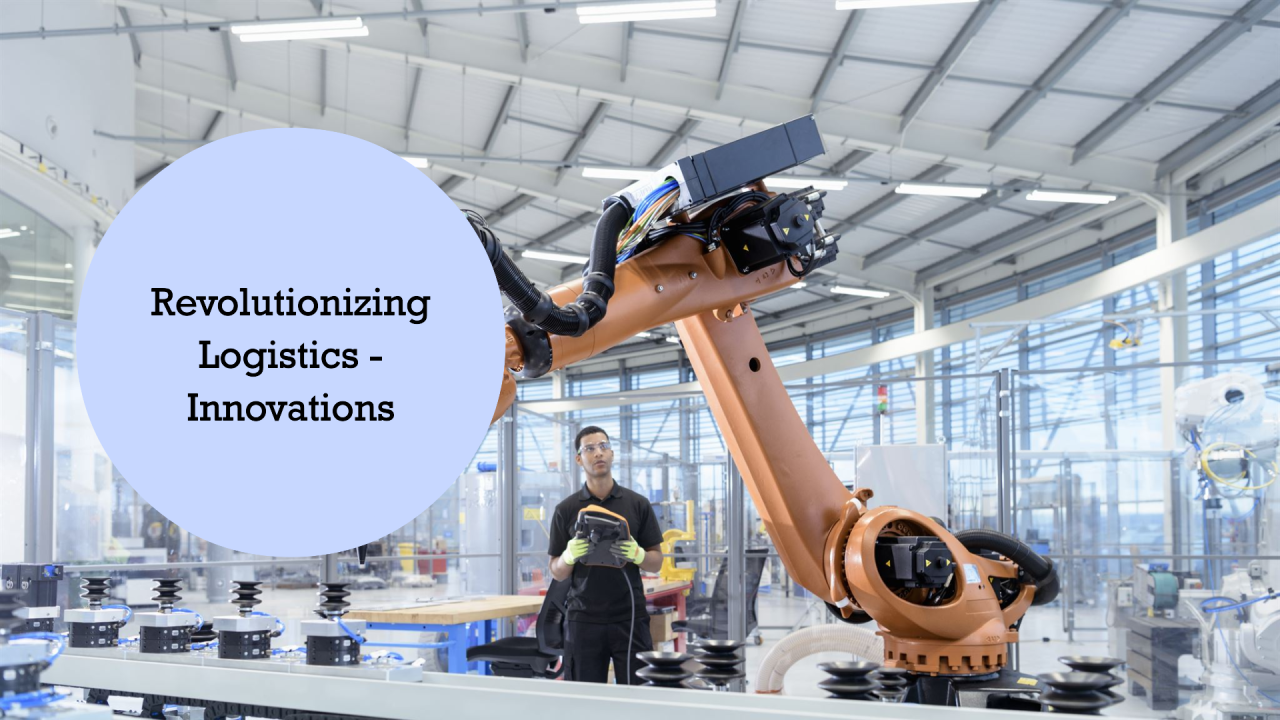
Robotics has revolutionized warehousing, order fulfillment, and inventory management, leading to significant gains in efficiency and reductions in labor costs. Alibaba has embraced this innovation, deploying robots in 70% of its warehouse operations.
These robots, capable of handling tasks such as picking, packing, and moving goods, have reduced labor costs by 30%, while advanced sensors help them avoid accidents. The integration of robotics has minimized manual errors and increased operational speed and accuracy.
This shift isn’t limited to Alibaba. Across the logistics industry, companies like Amazon are also employing robotics and AI-driven solutions. With over 200,000 robots in its fulfillment centers, Amazon has slashed order processing times by 30% and boosted accuracy to 99.7%. These innovations demonstrate how automation is transforming global supply chains, making them more efficient, cost-effective, and safe.
These advancements are driving a larger trend toward automation, which is fundamentally reshaping the supply chain industry by optimizing labor, boosting productivity, and enhancing safety protocols.
Internet of Things (IoT)
IoT devices enable real-time monitoring of goods during transport. With sensors and GPS trackers, companies can monitor location, temperature, humidity, and more.
Examples
Maersk’s implementation of IoT sensors through its Remote Container Management (RCM) system has significantly transformed how the company monitors and manages its cargo, particularly for perishable goods like fruits and vegetables.
By leveraging real-time visibility into critical metrics such as temperature, humidity, and location, Maersk has reduced spoilage in perishable cargo by approximately 15-20%. These sensors trigger automatic alerts whenever conditions deviate from preset standards, enabling immediate action to prevent product loss.
DHL has embraced IoT-enabled devices, such as their SmartSensor technology, to revolutionize shipment tracking. These sensors allow real-time monitoring of critical factors such as temperature, humidity, and location, making it particularly beneficial for pharmaceuticals and high-value goods.
FedEx uses SenseAware technology to provide real-time monitoring of shipments, especially for industries requiring stringent conditions, such as healthcare and manufacturing. The technology tracks crucial factors like light exposure, temperature, humidity, and barometric pressure. It sends immediate alerts if any conditions deviate from set parameters during transit.
Artificial Intelligence (AI) and Machine Learning (ML)
According to McKinsey, the use of AI can reduce forecasting errors by up to 50% and lower inventory costs by 20-30%, particularly through more accurate analysis of historical sales data and predictive algorithms.
For instance, Unilever and Amazon have integrated AI into their supply chains to achieve precise demand predictions and optimize warehouse operations, contributing to significant cost savings and efficiency improvements.
Moreover, Amazon leverages AI-driven predictive models to optimize delivery routes and inventory management, which has resulted in faster deliveries and reduced shipping costs by up to 15%. Similarly, Walmart uses AI to predict demand based on variables such as weather patterns, leading to a 30% reduction in stockouts and minimizing overstock issues.
Autonomous Vehicles and Drones
Amazon and UPS are leading the charge in using autonomous vehicles and drones to revolutionize last-mile deliveries, making them faster and more cost-efficient.
Amazon’s Prime Air drone delivery system is designed to deliver packages within 30 minutes of an order being placed. The drones are capable of carrying packages weighing up to 5 pounds and are equipped with advanced navigation systems to avoid obstacles.
Amazon has been testing this service in select locations, including Lockeford, California and College Station, Texas, and aims to expand drone deliveries to more cities.
Similarly, UPS has also been integrating drone deliveries through its Flight Forward program, aiming to expedite last-mile deliveries, particularly in healthcare sectors where time-sensitive packages like medical samples are delivered.
Take Home
These innovations are reshaping the supply chain landscape, enabling businesses to be more agile, sustainable, and customer-centric, ultimately enhancing efficiency in a competitive global market.