
TRADIENT — LEARN
Clear market foundations, explained from first principles for better long-term understanding.
-
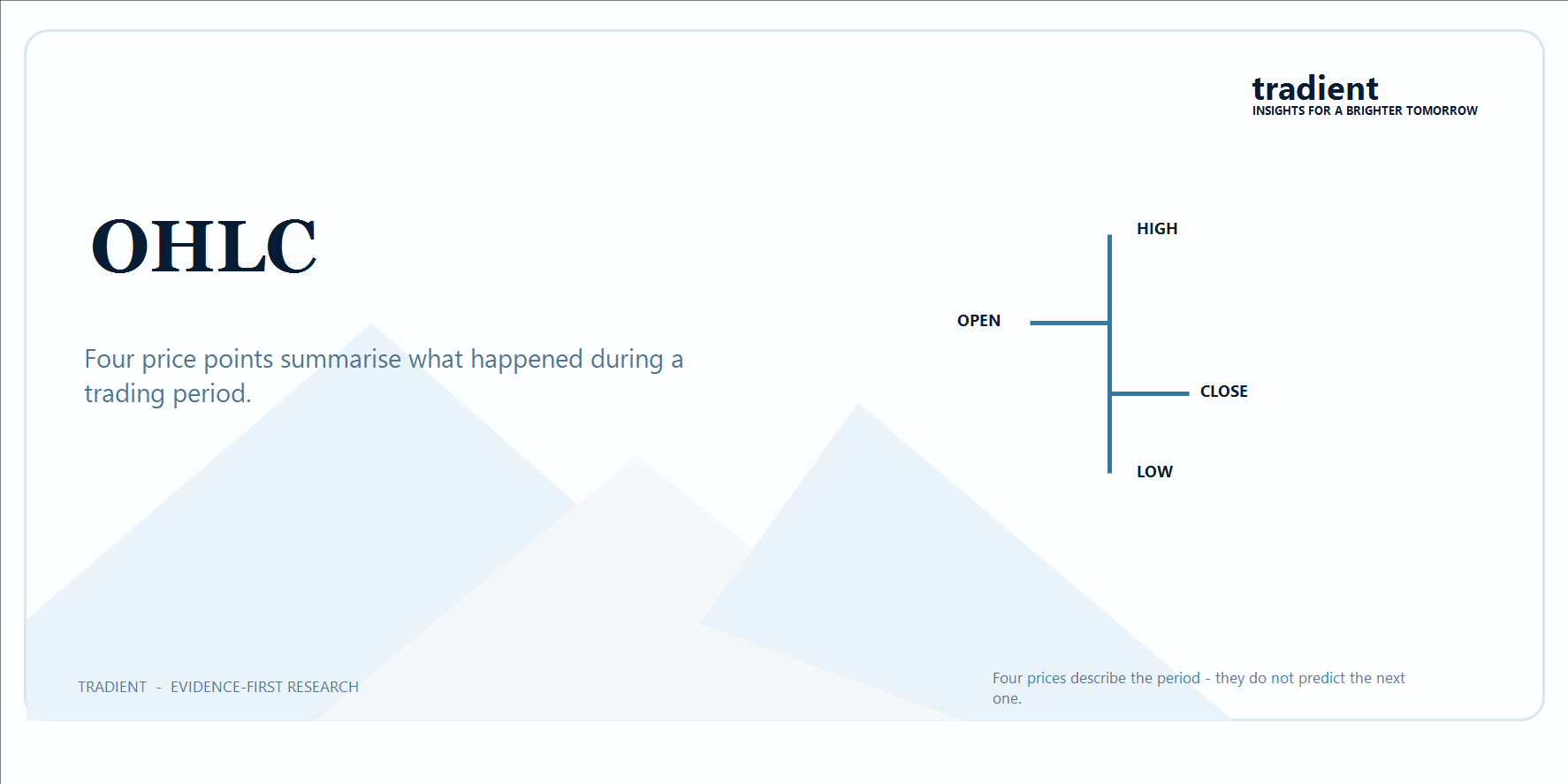
Open, High, Low and Close: The Four Basic Price Points
Open, High, Low and Close: The Four Basic Price Points A clear beginner-friendly guide with simple examples, common mistakes and practical takeaways for Indian market learners.
-
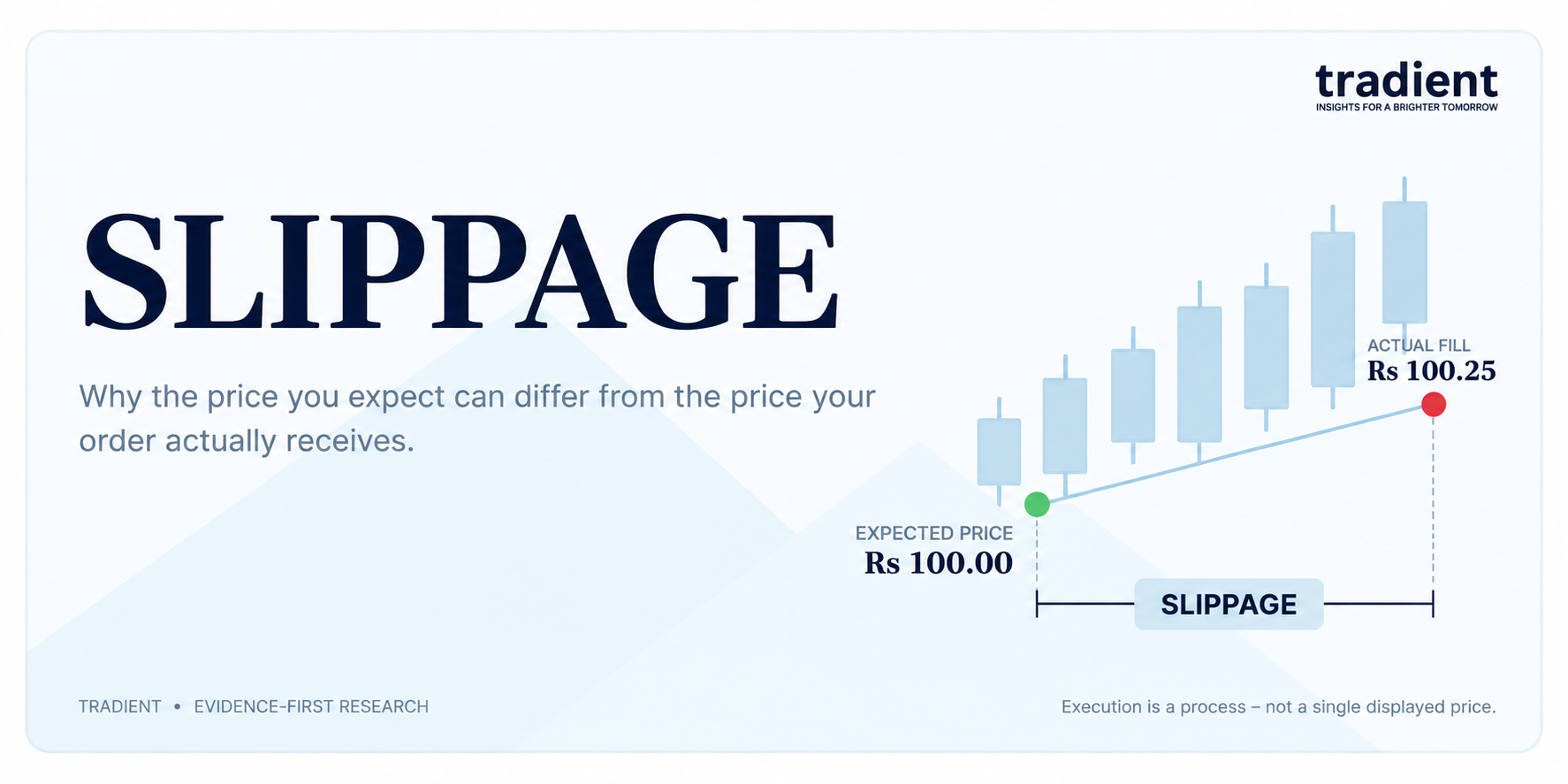
Slippage Explained: Why Your Execution Price Can Differ
Understand slippage in trading: why your fill can differ from the quoted price, how spreads, market depth, volatility and order size affect execution, and how to manage it.
-
Day Order, IOC and Other Common Order Validities
Learn the difference between DAY and IOC orders in India, how partial fills work, when unmatched quantity is cancelled, and how order validity changes execution risk.
-
Order Book and Market Depth: How to Read Them
Learn how to read an order book and market depth: best bid and ask, price-time priority, depth levels, liquidity, imbalance and the limits of visible orders.
-
Bid Price, Ask Price and Bid-Ask Spread Explained
Bid price, ask price and bid-ask spread explained for beginners: what each means, why spreads widen, and how liquidity affects your real trading cost.
-
Stop-Limit vs Stop-Market: What Can Go Wrong?
Stop-limit vs stop-market orders explained: how triggers work, why fills can differ, gap and liquidity risks, and when each approach can fail in fast markets.
-
Stop-Loss Orders Explained for Beginners
Stop-loss orders explained for beginners: trigger price, limit price, execution risk, gap risk and how stop-loss orders differ from a guaranteed exit.
-
Market Order vs Limit Order: When Each Is Used
Market order vs limit order explained for Indian-market beginners: execution priority, price control, liquidity, slippage and when each order type may be appropriate.
-
Depositories Explained: NSDL, CDSL and Beneficial Ownership
NSDL vs CDSL explained for beginners: what a depository does, how depository participants fit in, and why you remain the beneficial owner of demat securities.
-
What Happens After You Buy a Share?
What happens after you buy a share in India – execution, contract note, clearing, T+1 settlement, demat credit and the records you should check.
-
How Trade Settlement Works in India
How trade settlement works in India: T+1, optional T+0, clearing, pay-in, payout and demat credit explained step by step for beginners.
-
Understanding Contract Notes, Brokerage and Trading Charges
Contract notes, brokerage and trading charges explained for Indian investors – what each line means, which levies apply and how to audit a trade.