
TRADIENT — LEARN
Decision-making, discipline and behavioural patterns that shape how traders respond to markets.
-
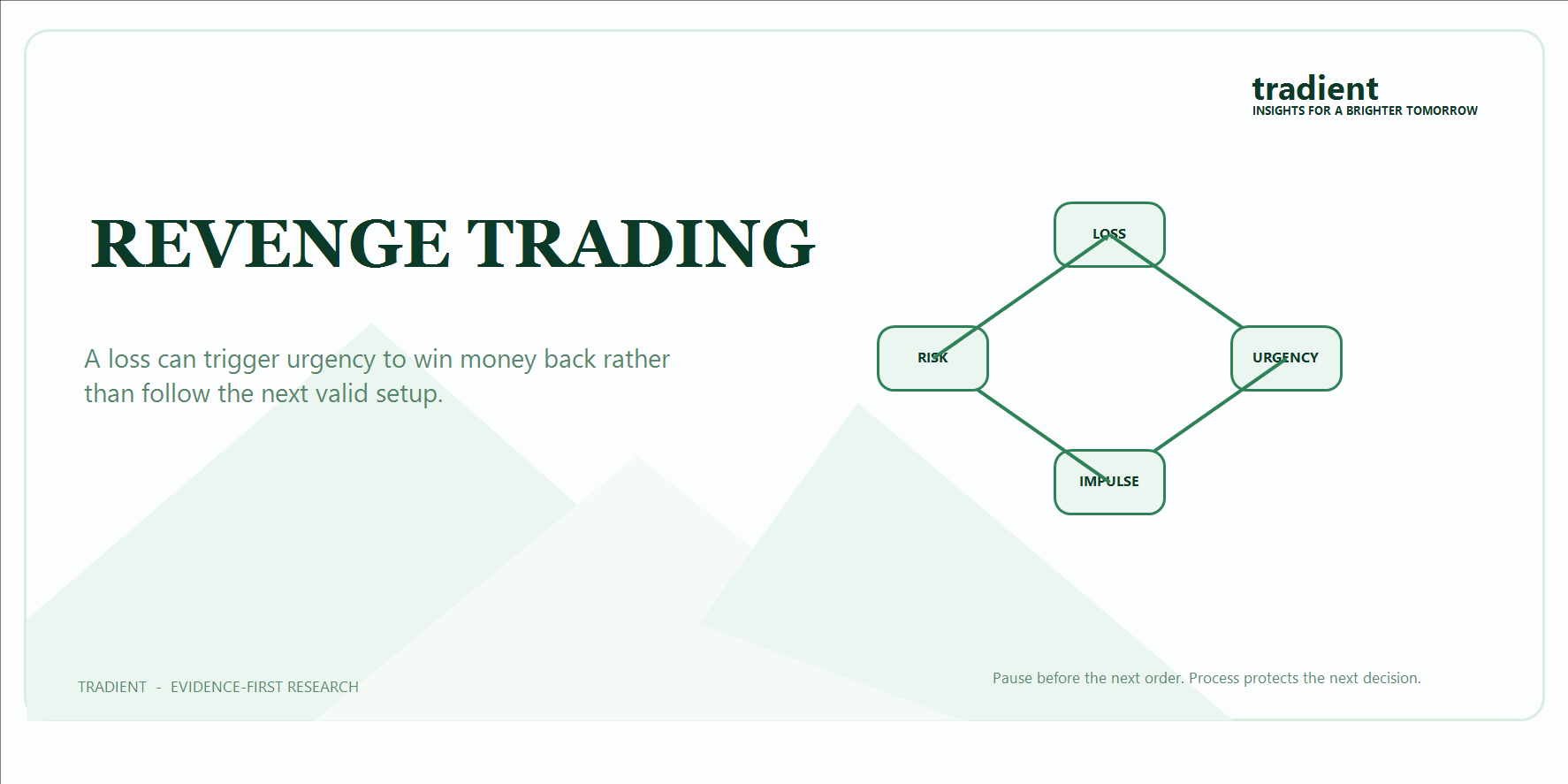
What Is Revenge Trading?
What Is Revenge Trading? Learn the behavioural pattern, why it affects decision quality and the practical process rules traders can use.
-
How a Daily Stop Rule Protects Decision Quality
A daily stop rule is more than a loss limit. Learn how session-level boundaries protect decision quality, when to stop trading, and how to design the rule from…
-
Recognising the Urge to Trade After a Small Loss
Why does a small loss create an immediate urge to trade again? Learn the psychology of revenge entry, how to spot the trigger, and practical rules that protect…
-
Setting a Maximum Number of Trades per Day
A maximum trades-per-day rule can act as a behavioural circuit breaker. Learn when a trade cap helps, when it hurts, and how to design one from your strategy…
-
Why More Trades Do Not Mean More Opportunity
More trades do not automatically mean more opportunity. Learn the difference between market activity and strategy edge, plus a framework for staying selective.
-
How Boredom Creates Low-Quality Trades
Boredom trading explained: why quiet markets create pressure to act, how low-quality setups enter the plan, and a practical protocol for staying selective.
-
Action Bias: Why Doing Nothing Can Be the Best Trade
Action bias in trading explained: why pressure to act can override good judgment, when doing nothing is a valid trading decision and how to build a wait-state into…
-
Overtrading: When Activity Feels Like Productivity
Overtrading psychology explained: why activity can feel productive, how excessive trading damages decision quality and a practical framework for trading less but better.
-
Why There Will Always Be Another Trade
Why traders feel they must act now – and how the “another trade will come” mindset can reduce FOMO, improve selectivity and protect risk discipline.
-
How to Create a No-Chase Rule
Create a practical no-chase rule using entry distance, invalidation, risk-reward, cooling-off and re-entry criteria to stop FOMO-driven trades.
-
The Psychology of Buying After a Sharp Rally
Why do traders feel compelled to buy after a sharp rally? Understand attention, extrapolation, FOMO and how late entries can change risk-reward.
-
Missing a Trade Without Losing Your Discipline
Missed a trade? Learn why regret over inaction can trigger chasing, how to separate outcome from process and use a practical reset routine.