
TRADIENT — LEARN
Decision-making, discipline and behavioural patterns that shape how traders respond to markets.
-
Why Breakout Chasing Can Destroy Risk-Reward
A breakout can be real and still be a bad chase. Learn how late entries compress reward-to-risk and build practical no-chase rules before the next fast move.
-
How Social Media Amplifies FOMO
Social media does not create every impulsive trade, but it can make urgency, crowd signals and missed-gain anxiety much harder to ignore. Here is how to build friction…
-

FOMO Trading: Why Late Entries Feel So Compelling
FOMO is not merely excitement. In trading, it can transform a missed move into a sense of urgency that overrides price, risk and process. Here is how to…
-
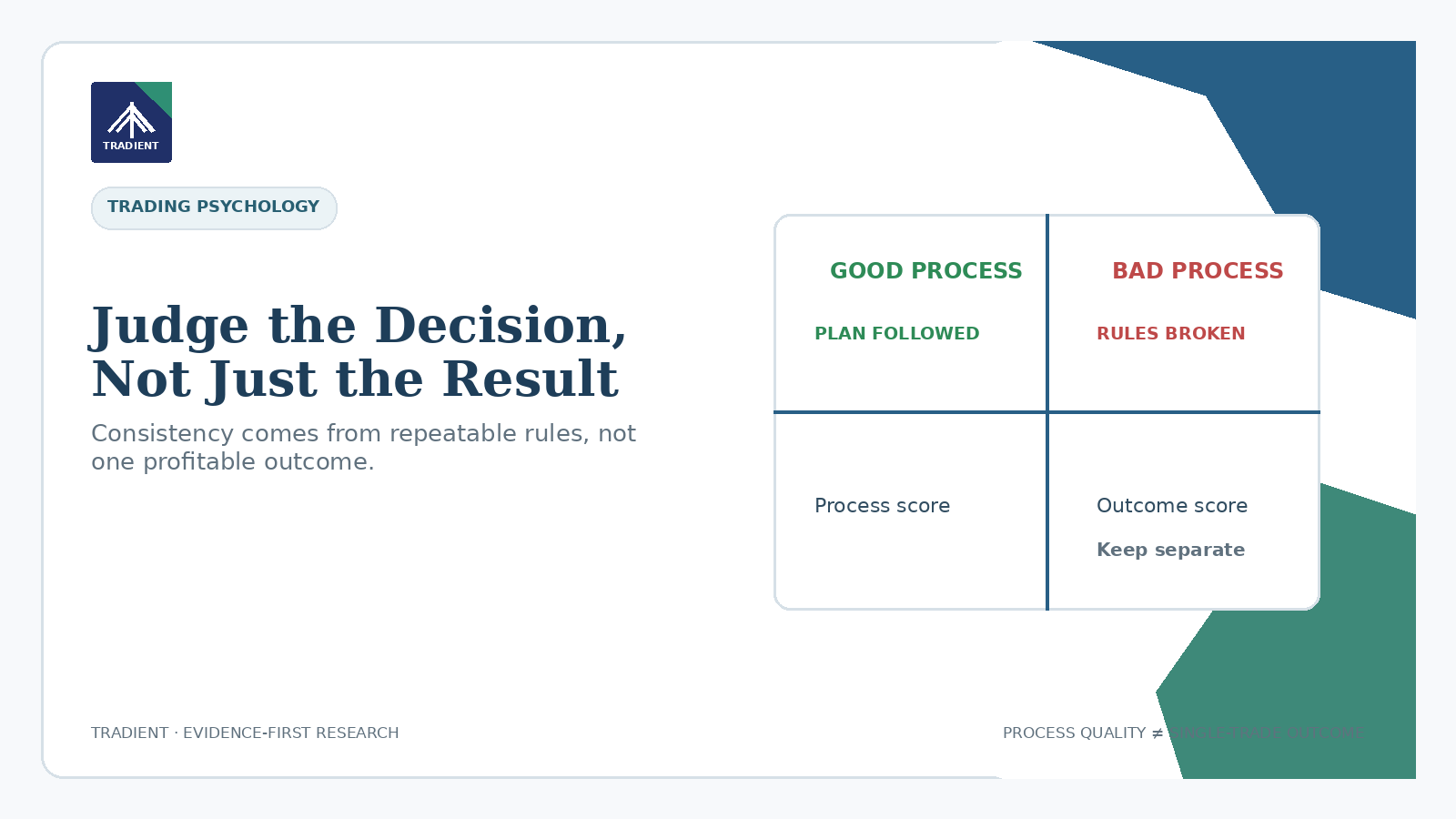
Separating a Bad Trade from a Bad Trading Process
A good process can produce a losing trade and a bad process can produce a profit. Separating outcome from decision quality is essential for learning, risk governance and…
-
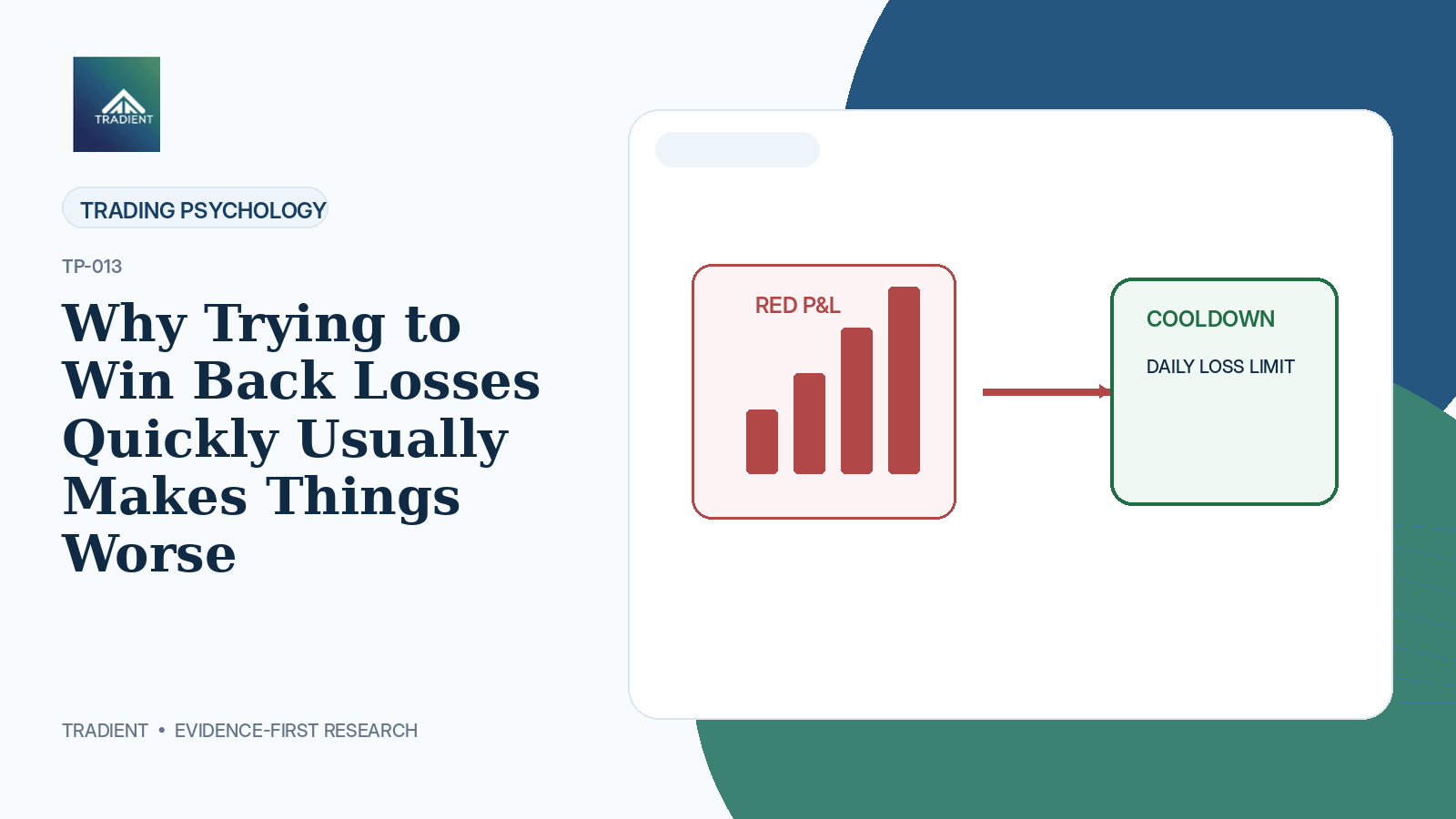
Why Trying to Win Back Losses Quickly Usually Makes Things Worse
Revenge trading replaces the strategy’s opportunity set with a personal recovery target. It often increases size, frequency and selectivity errors precisely when decision quality is already under pressure.
-
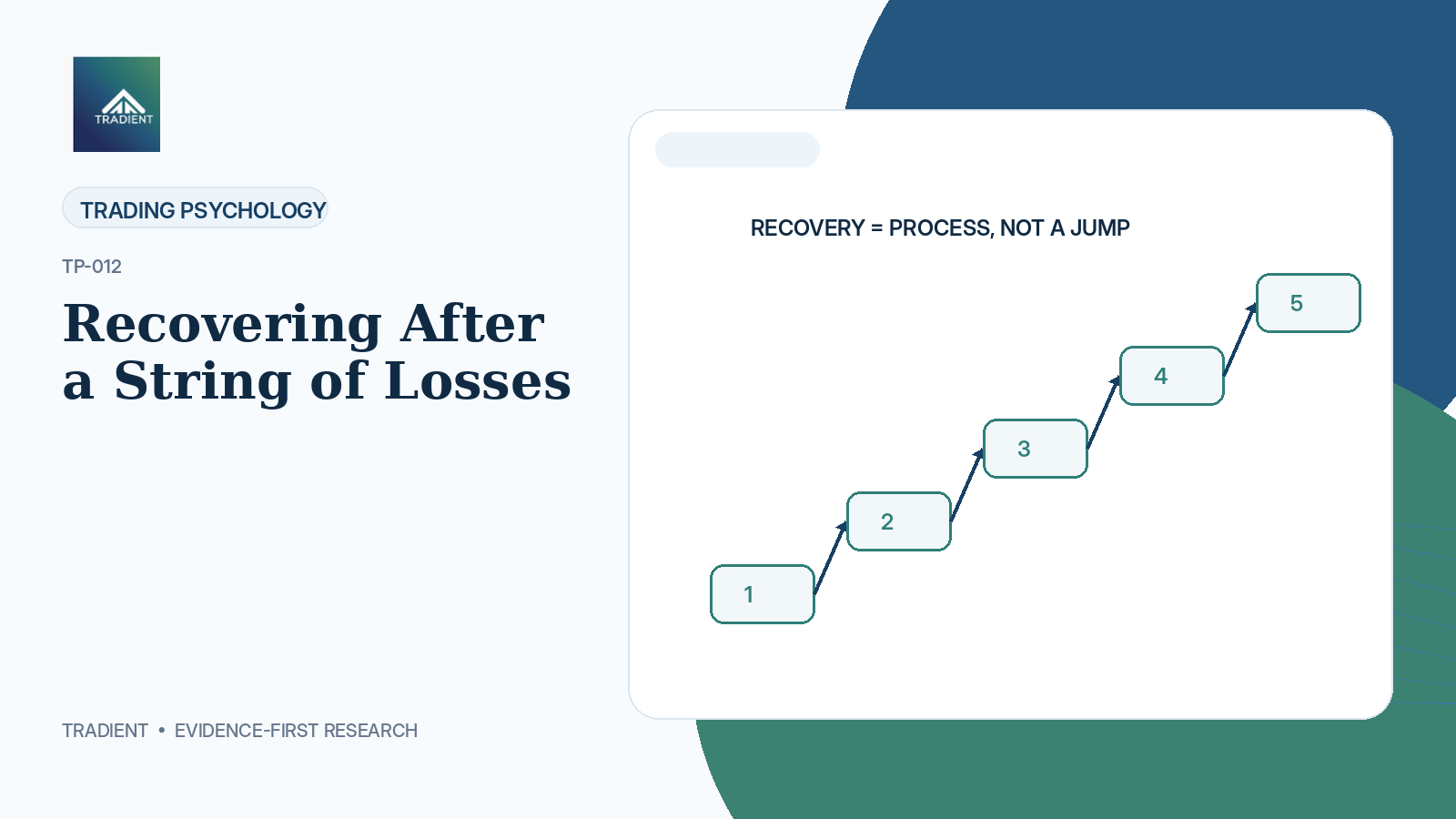
Recovering After a String of Losses
After several losses, traders often alternate between fear and urgency. Recovery should begin with process diagnosis and controlled risk, not with the goal of immediately returning the account…
-
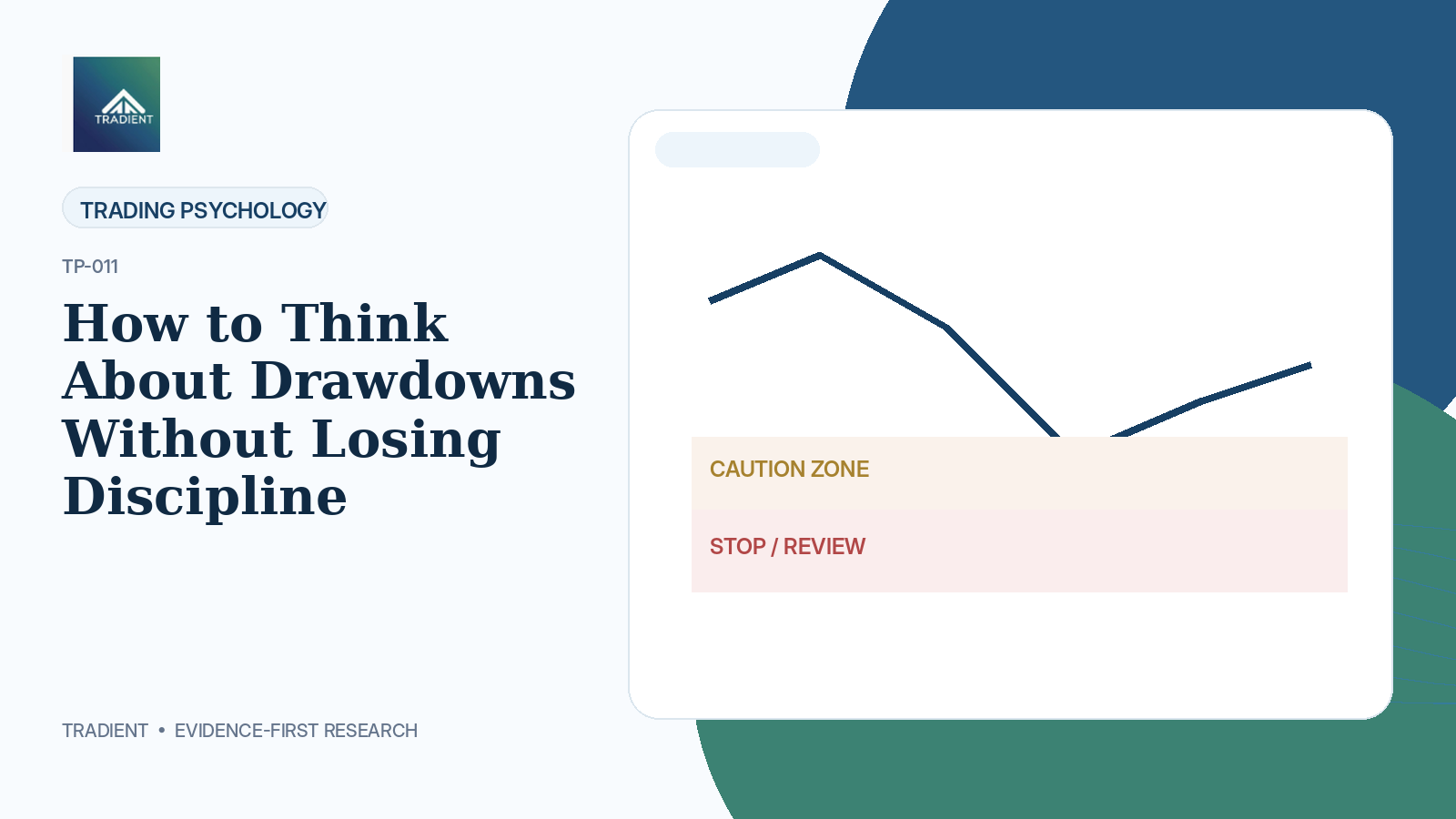
How to Think About Drawdowns Without Losing Discipline
A drawdown is a decline from a prior equity peak, not proof by itself that a strategy has stopped working. Traders need thresholds that distinguish expected variance from…
-
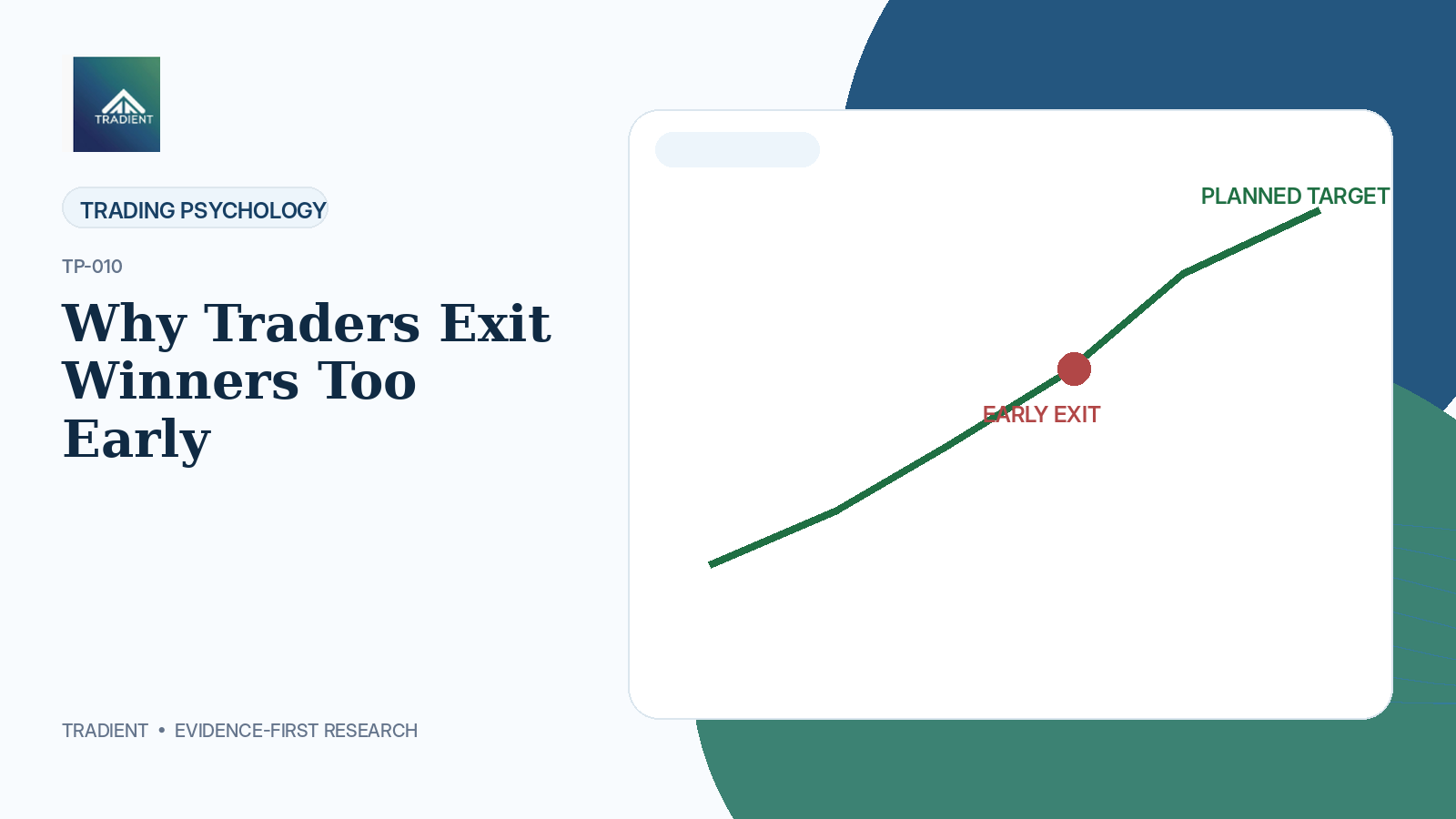
Why Traders Exit Winners Too Early
Winning positions can create anxiety because unrealised gains can disappear. Traders may lock in profit for emotional relief even when the exit contradicts the strategy’s payoff logic.
-
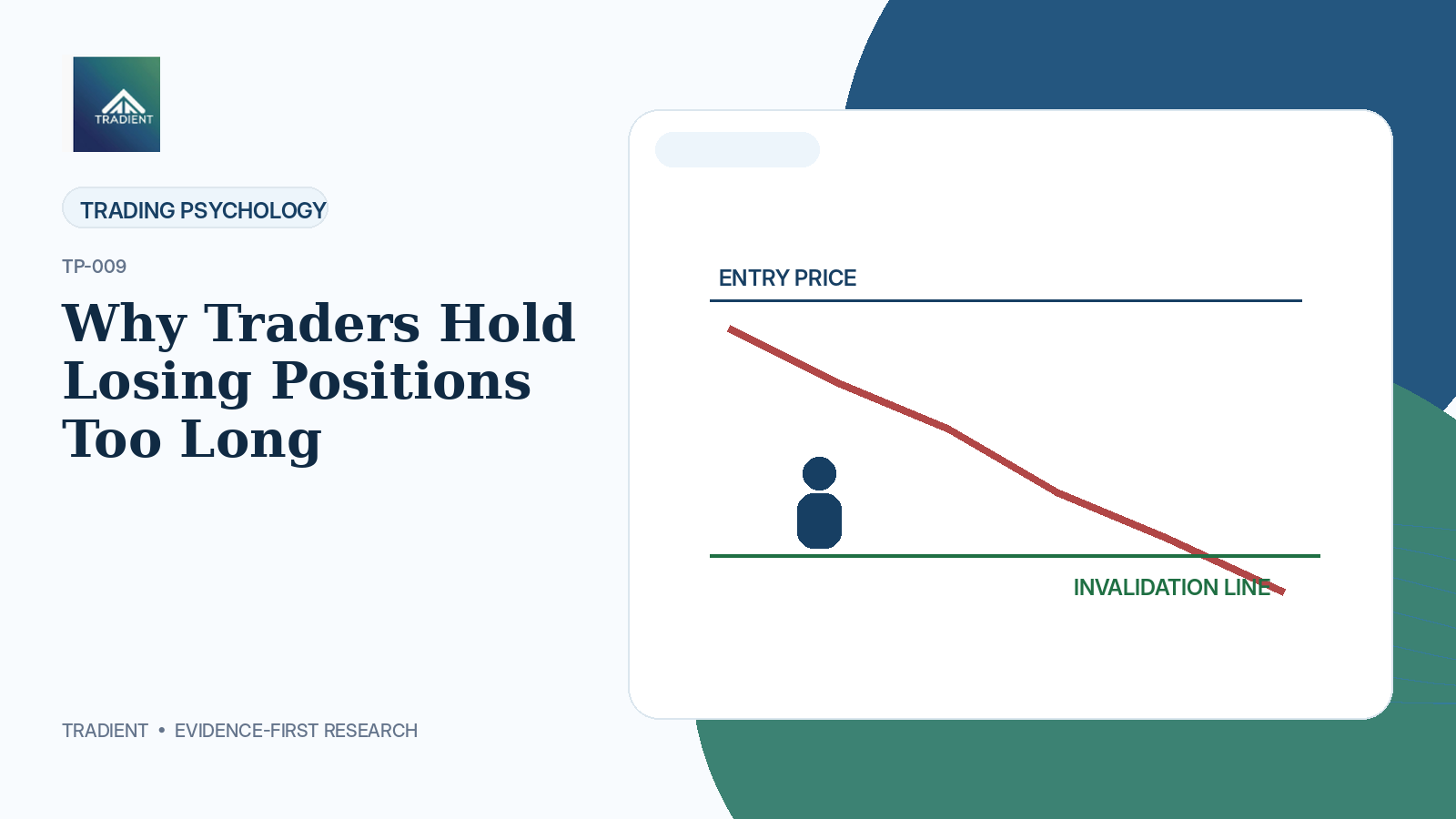
Why Traders Hold Losing Positions Too Long
Losing positions can become psychologically sticky because selling confirms the loss, threatens the original thesis and removes hope of recovery. A predefined invalidation rule helps separate evidence from…
-
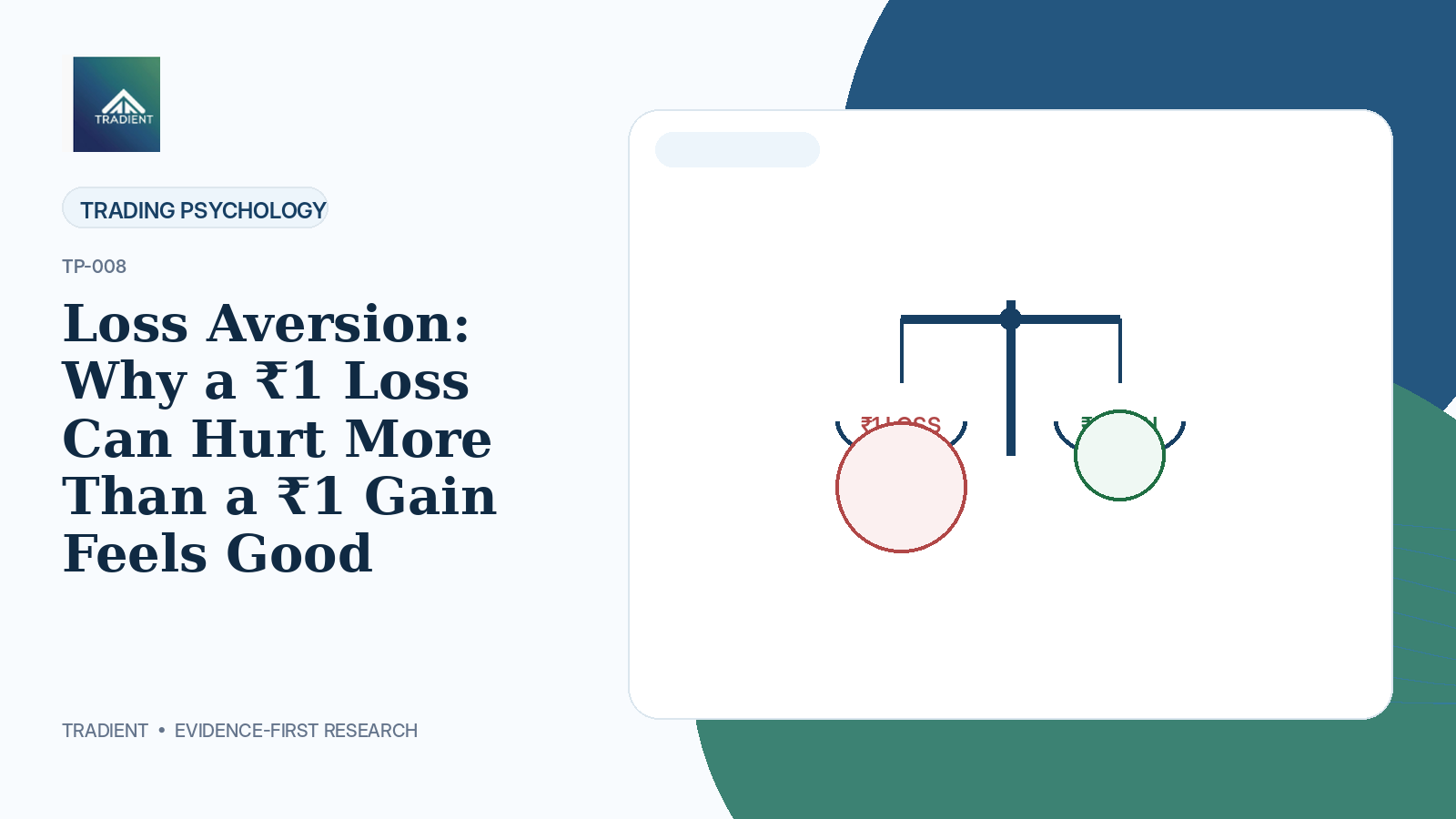
Loss Aversion: Why a ₹1 Loss Can Hurt More Than a ₹1 Gain Feels Good
Loss aversion describes the tendency for losses to carry disproportionate psychological weight. In markets it can encourage premature profit-taking, delayed loss recognition and inconsistent risk choices.
-
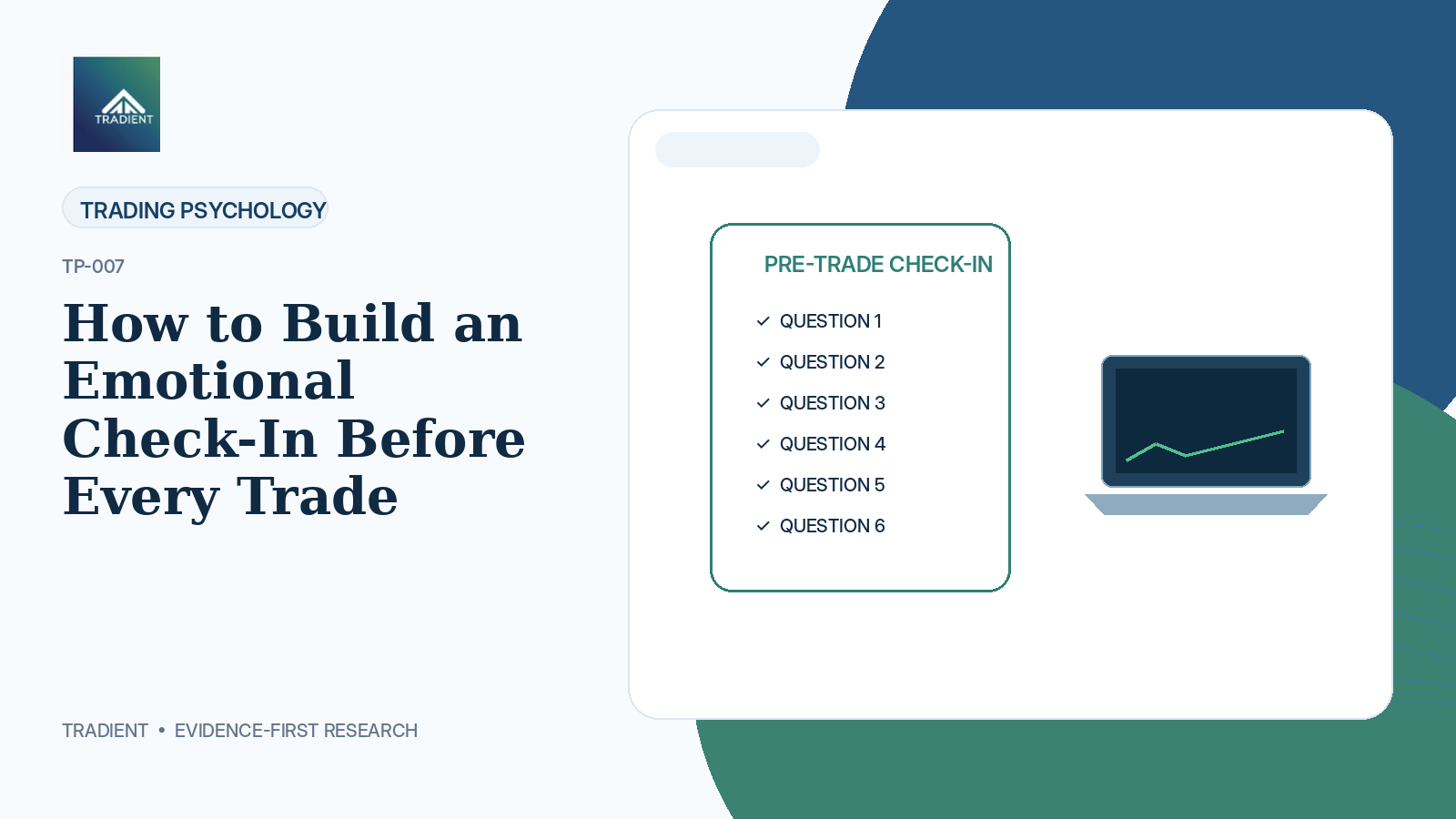
How to Build an Emotional Check-In Before Every Trade
A 30-second emotional check-in can reveal urgency, revenge, fear and size pressure before an order is placed. It should complement—not replace—the technical and risk checklist.
-
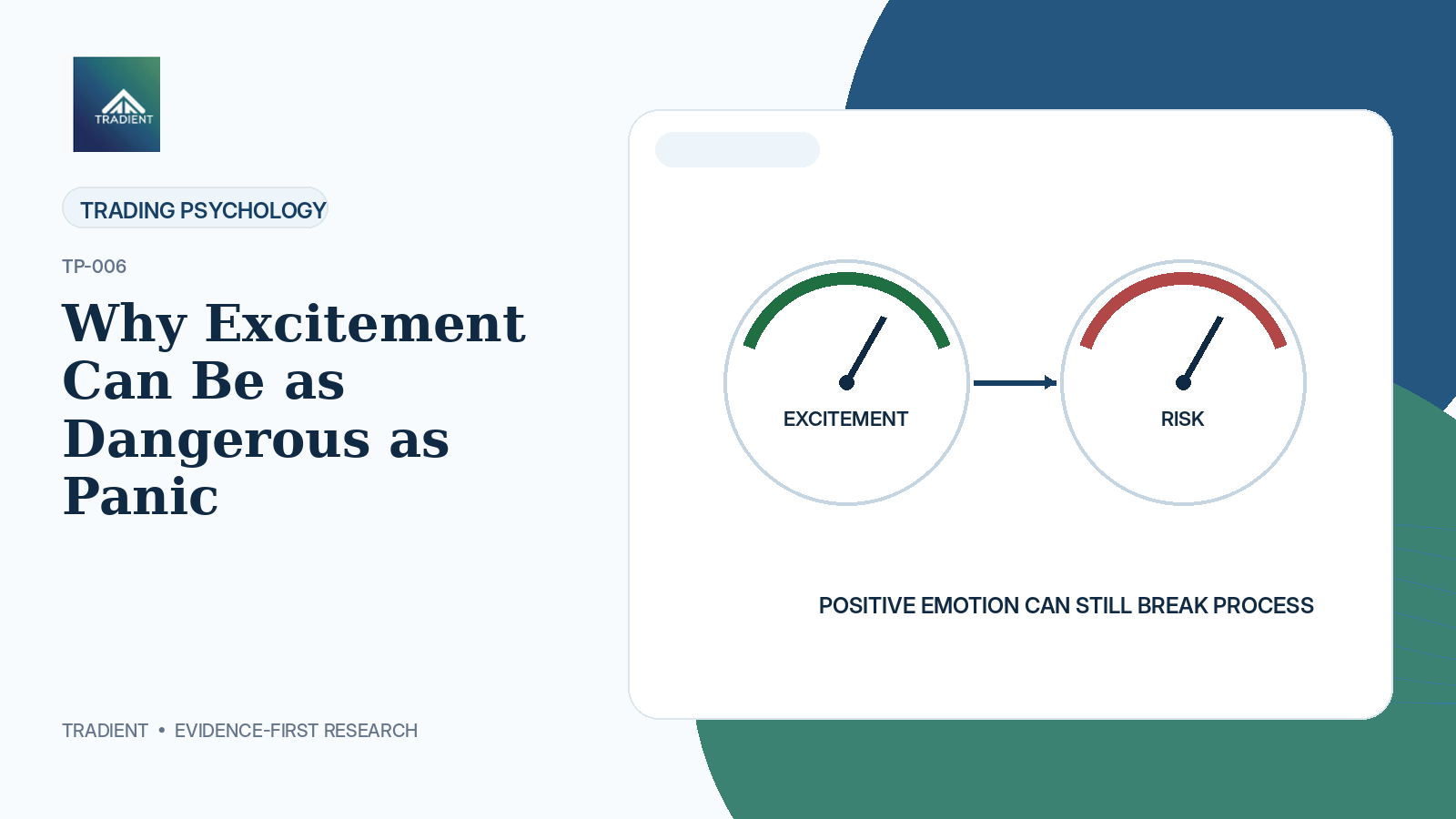
Why Excitement Can Be as Dangerous as Panic
Excitement can increase speed, frequency and confidence while reducing selectivity. The result can resemble panic in reverse: too many decisions made with too little verification.