
TRADIENT — LEARN
Decision-making, discipline and behavioural patterns that shape how traders respond to markets.
-
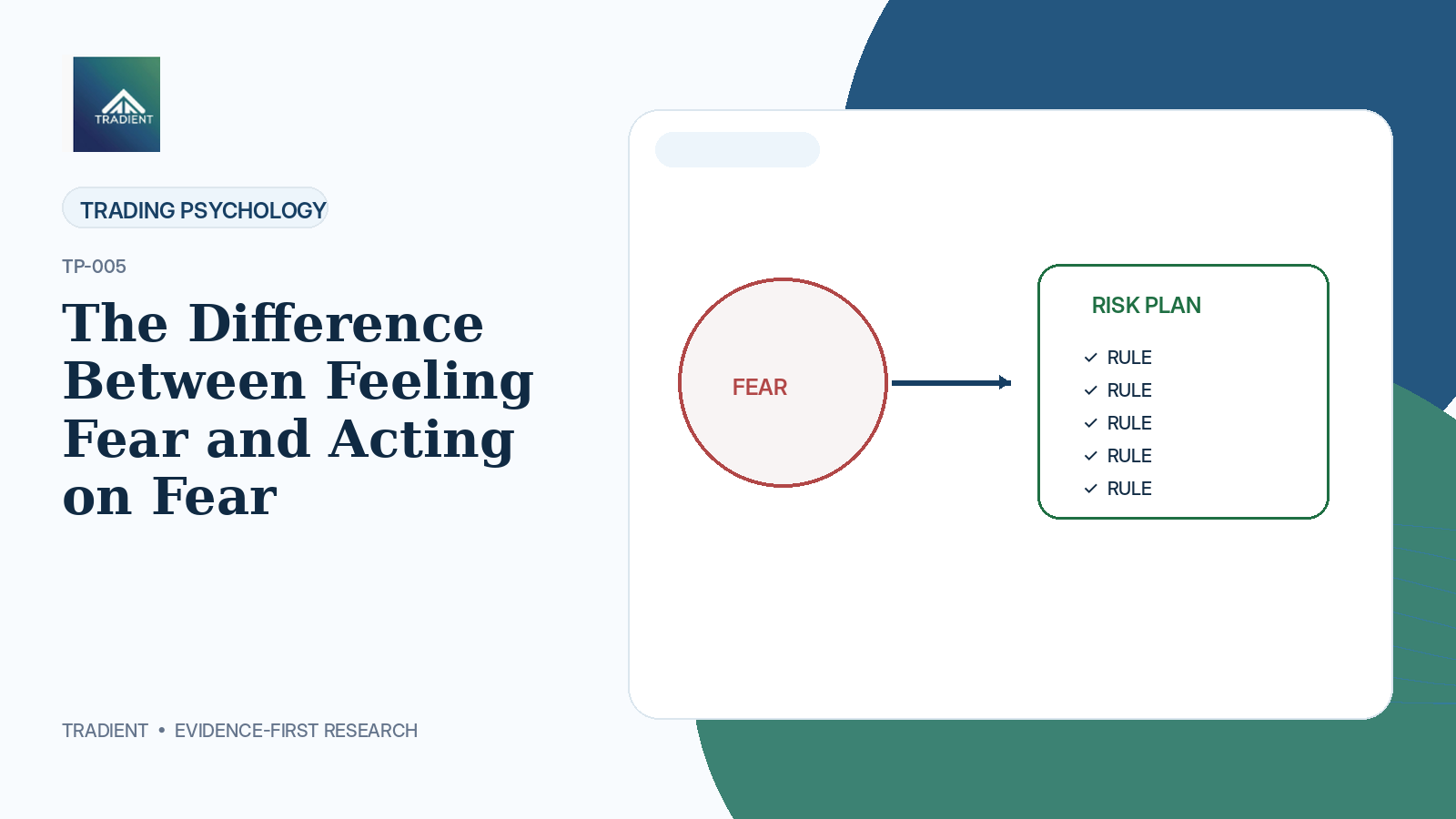
The Difference Between Feeling Fear and Acting on Fear
Fear is information about perceived risk; it does not have to become an instruction. Traders can acknowledge fear while still following a position size, invalidation level and exit…
-
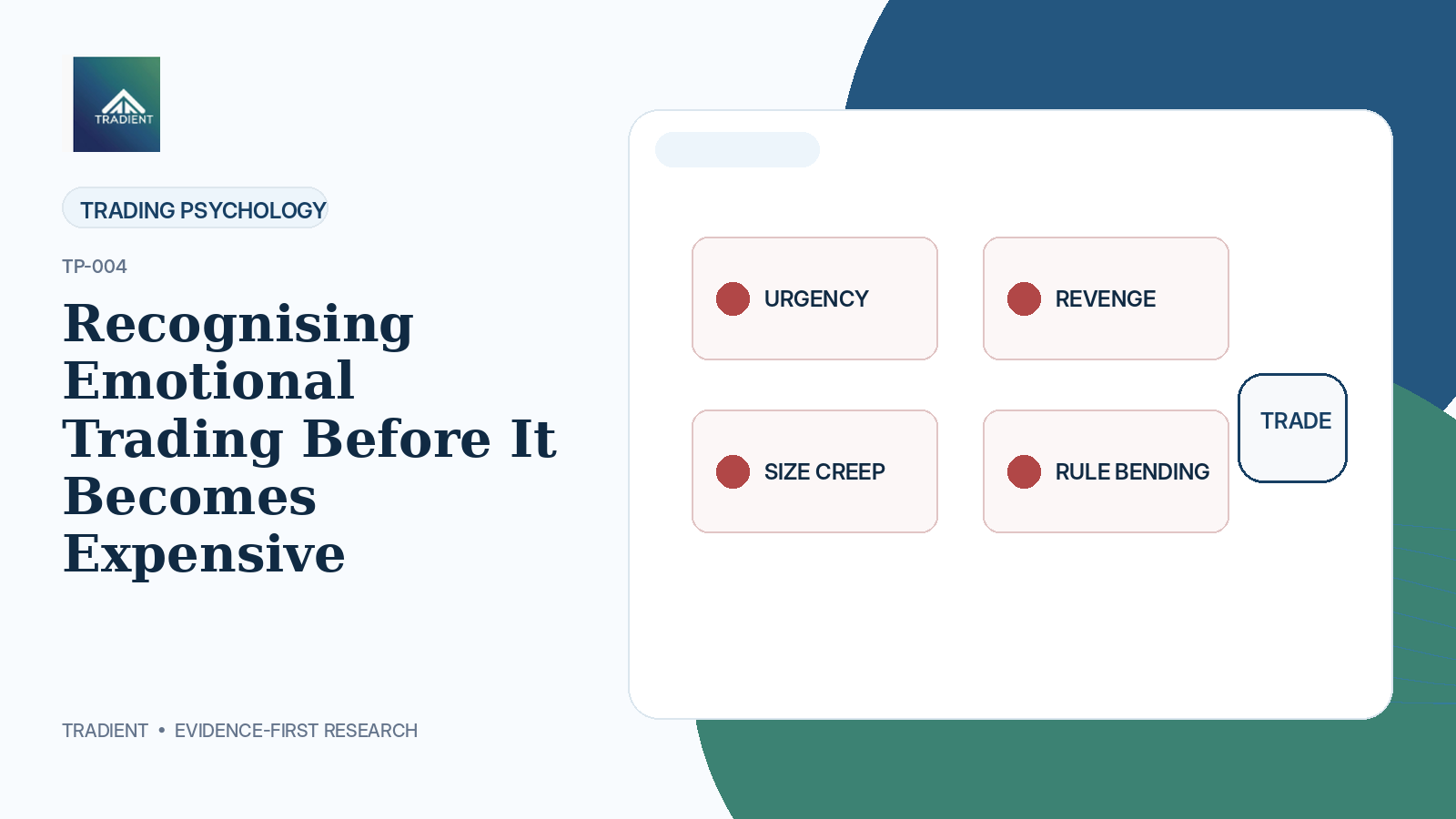
Recognising Emotional Trading Before It Becomes Expensive
Emotional trading usually leaves early signals: urgency, rule bending, revenge thoughts, checking P&L compulsively and changing size without evidence. A detection checklist can interrupt the pattern before capital…
-
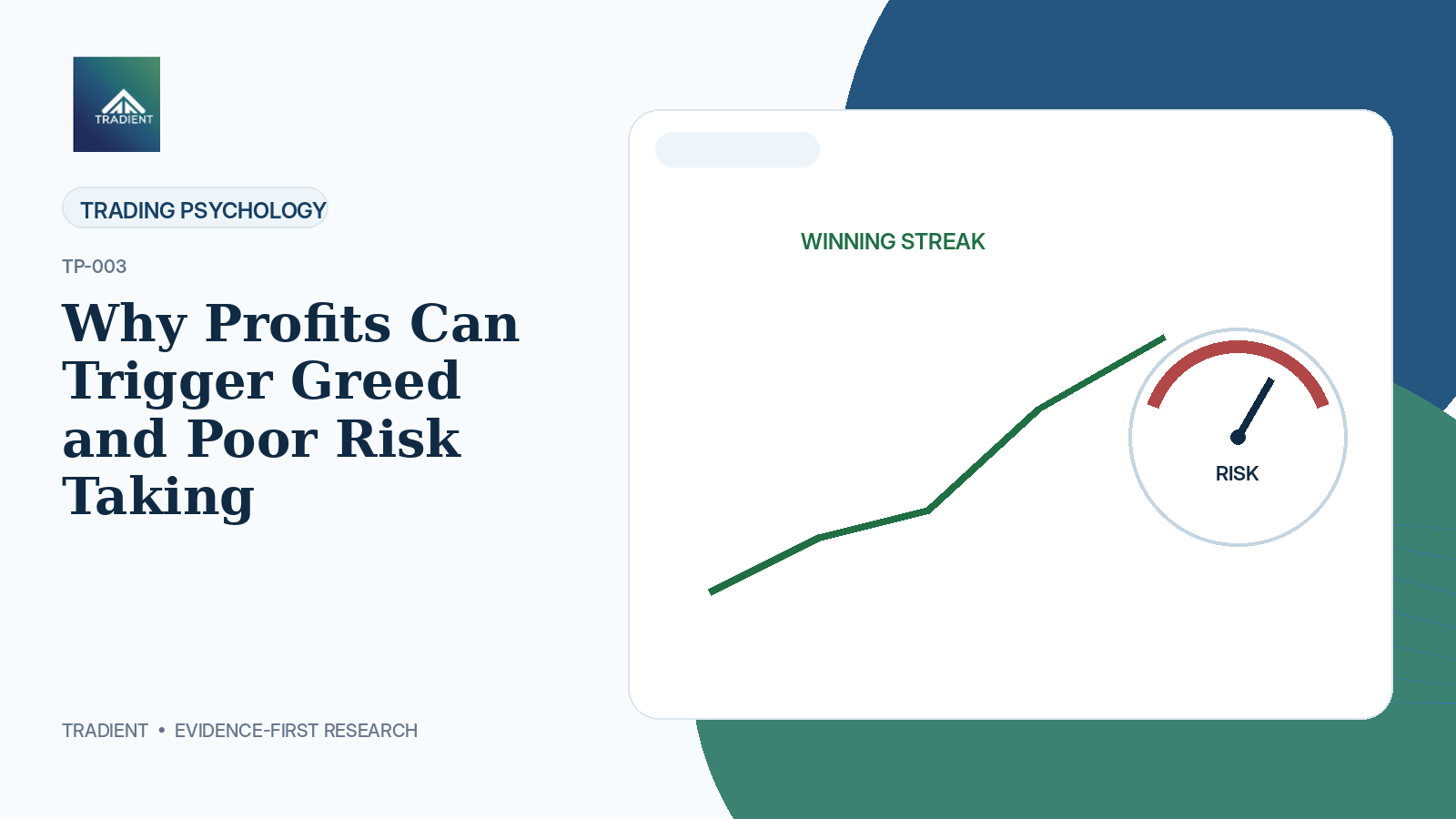
Why Profits Can Trigger Greed and Poor Risk Taking
Winning trades can create overconfidence, larger bets and looser standards. A profit is useful information about one outcome, not proof that the next trade deserves more risk.
-
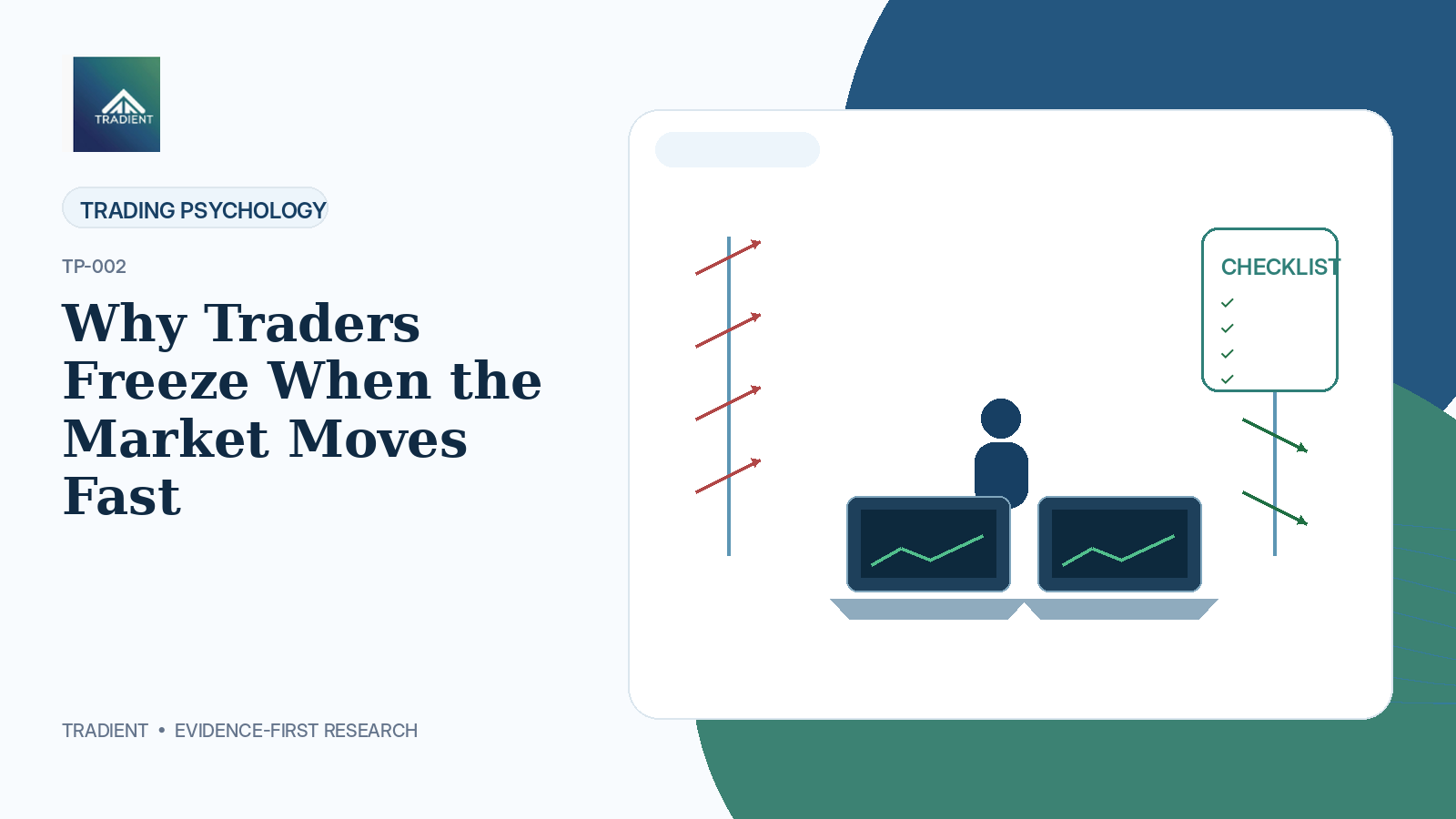
Why Traders Freeze When the Market Moves Fast
Fast markets can overload attention and trigger hesitation. A pre-defined decision process can reduce the need to improvise when prices, volatility and information accelerate.
-
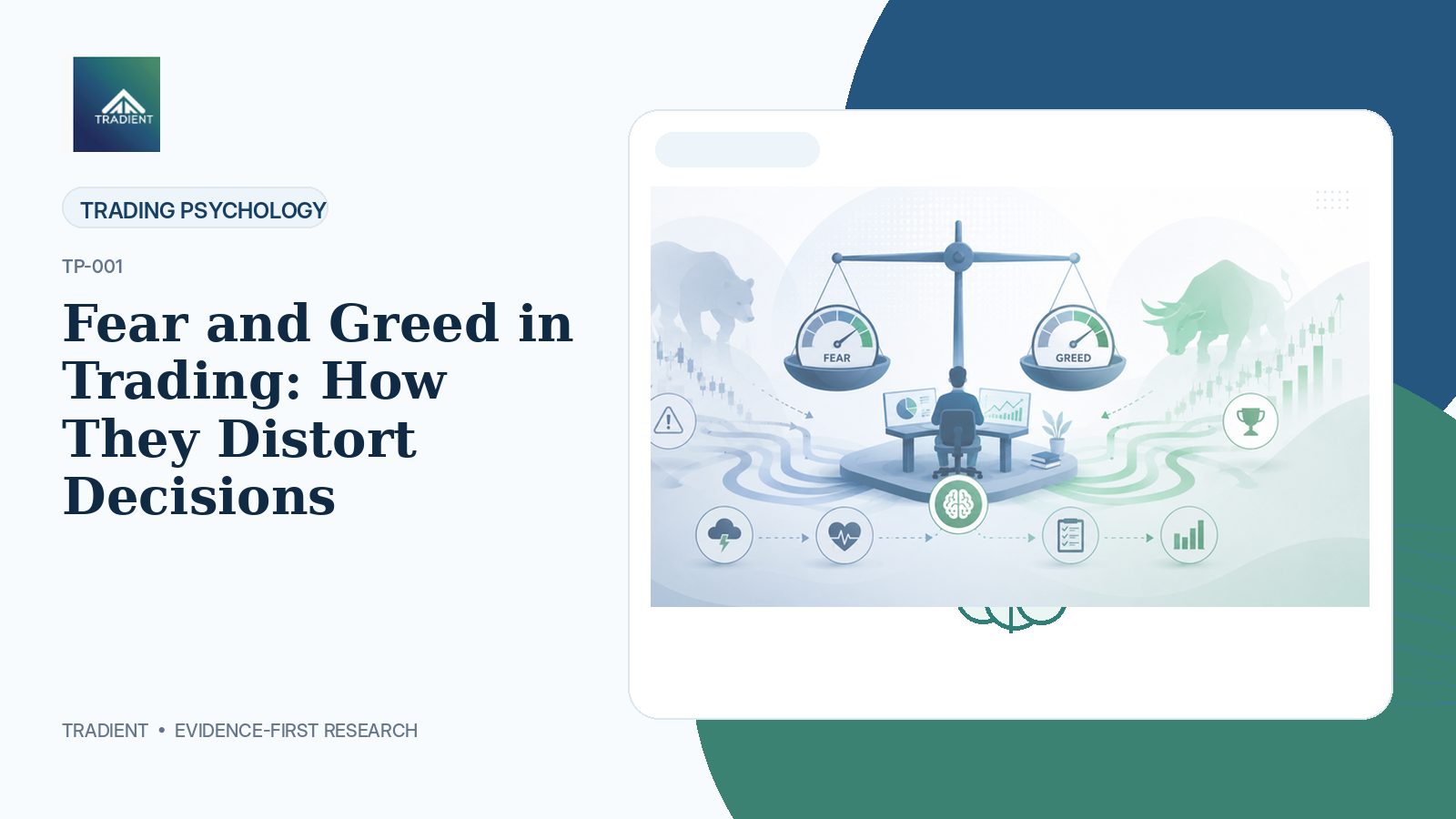
Fear and Greed in Trading: How They Distort Decisions
Fear and greed are not mysterious market forces; they are emotional states that can change how traders interpret risk, information and probability. The goal is not to eliminate…